


It is a well-established fact that physical activity and exercise are good for your health. Unfortunately, it is also a fact that - especially in Western civilizations - many people are not as physically active as they should be.
"Low physical activity, together with excess weight, may account for as many as 30% of all breast cancer cases, Peplonska argues. Taking into consideration that breast cancer accounts for 22.8% of cancer cases worldwide, "simple calculations based on the total number of incident breast cancer cases in 2011 indicate that 400.000 women would not have developed breast cancer if they had been more physically active, the researcher highlights. Interestingly, Peplonska also found an extensive amount of studies providing evidence that - contrary to previous argumentation - physical activity does not only decrease breast cancer risk in postmenopausal but also in premenopausal women.
"It has been suggested that body mass index (BMI) might modify the association between breast cancer and physical activity, but the published epidemiological data [
] are not entirely consistent, and no mechanism to explain differences as a function of BMI pattern is known, the researcher explains. However, it is supposable that physical activity - in addition to preventing obesity - might have an influence on a whole range of biological parameters. Changes in endogenous sex hormones and sex-hormon binding globulin, insulin and insulin-like growth factors (IGF) as well as immunologic parameters have been identified as potential biomarkers in the pathway relating physical activity to breast cancer reduction, Peplonska sums up her findings.
Identifying physical inactivity as a risk factor for breast cancer has important implications for cancer prevention since most of the currently well-established risk factors for breast cancer (e.g. older age, breast cancer in first degree female relatives, exposure to ionizing radiation during adolescence, early menarche or late menopause) cannot be modified. The amount of physical activity on the other hand is determined by individual lifestyle and could be changed easily. Due to Peplonska, every type of physical activity might help to prevent breast cancer; examples being work-related and household activities, walking instead of driving, taking the stairs more often and engaging in sports during leisure time; "although the greatest risk reduction was found in women who engage in recreational activities Peplonska stresses.
The World Cancer Research Fund (American Institute for Cancer Research) issues the following personal recommends:
- Be moderately physically active, equivalent to brisk walking for at least 30 minutes every day
- As fitness improves, aim for 60 minutes or more of moderate, or 30 minutes of more vigorous, physical activity every day
- Limit sedentary habits such as watching television or surfing the Internet
According to literature, 30 minutes of moderate physical activity a day are sufficient for women in order to lower their individual breast cancer risk up to 9%. LKZ
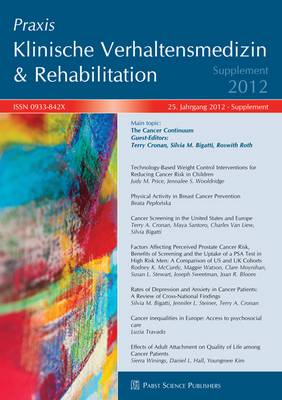
Praxis Klinische Verhaltensmedizin und Rehabilitation - 2012 Supplement