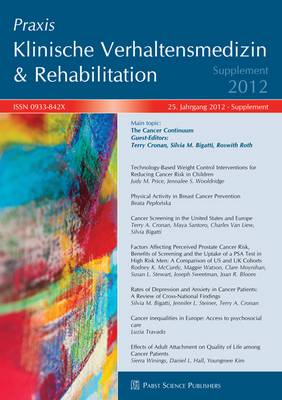
Cancer patients mental health may benefit from avoidant attachment in the early phase of diagnosis and treatment, study finds. Sierra Winings, David L. Hall and Youngmee Kim, Department of Psychology, University of Miami, expanded attachment theory to the interpersonal level by including cancer patients attachment orientations, as well as differences between patients and their significant caregivers on the same attachment pattern. Avoidant attachment predicted better self-reported mental health in colorectal cancer patients 6 month after diagnosis - regardless of their caregivers avoidance orientation. In the Journal "Praxis Klinische Verhaltensmedizin und Rehabilitation the researchers present their results.
Being diagnosed with cancer is a major stressor; not only for patients but also for family members and friends. Interestingly, not all cancer patients report a decrease in life quality. Close relationships have repeatedly been found to play an important role in regulating negative affect and maintaining physical and mental health in the face of stress and chronic illness.
A group of researchers from the University of Miami examined the extent to which cancer patients attachment styles, as well as differences in attachment styles between patients and their caregivers, relate to patients mental and physical health. The results indicate that patients avoidance orientation, regardless of their caregivers avoidance style, is related to better mental health 6 months after diagnosis.
"Characteristics of avoidant attachment, such as hypo-vigilance about anxiety-provoking stimuli and self-reliance may shield cancer patients in their early phase of survivorship against the possibly overwhelming turmoil from cancer diagnosis and treatment. Patients who can temporarily distance themselves from [
] potentially overwhelming caregivers appear to have better psychological well-being, Winings interprets the findings.
Orientations to close relationships in the face of stress are often conceptualized via adult attachment theory. According to this theory, humans have an attachment system that is activated by threat and which operates to maintain a sense of security.
"Three prototypes of adult attachment exist, Winings explains. "Secure attachment is characterized by a sense of closeness and easy reliance upon another. Secure relationships are reciprocal and balanced, allowing for flexibility and effective collaboration. On the other hand, someone who is anxiously attached may want intimacy with the other, but has a chronic sense of vulnerability and insecurity about whether or not the other will be available. Avoidant attachment is characterized by high levels of self-reliance and greater interpersonal distance.
"The majority of existing literature has examined the effects of attachment mostly at the individual level and has not considered the attachment of the partner, the researcher highlights. "It is interesting that only patients avoidant, not secure or anxious, attachment orientation, or difference in avoidant attachment relative to their caregivers, significantly predicted the patients mental health at 6-month post-diagnosis. However, the consequences of long-term use of such interpersonal strategy should be carefully investigated. The majority of literature has documented the ill effect of chronic use of denial in dealing with adversity and illness.
Despite the finding that avoidant attachment may help cancer patients cope in the first phase of survivorship, it is very likely that "patients with an avoidant attachment style could benefit from educational interventions designed to assist them in managing relationship anxiety and concerns, Winings stresses. Though beneficial in the first turmoil of events, self-reliance and emotional distancing may not be the best strategies to cope as cancer proceeds. LKZ
Praxis Klinische Verhaltensmedizin und Rehabilitation - 2012 Supplement