


Three person-based components appeared to be important determinants of corruption:
- A corruption-friendly atitude; corruption is seen as right, as wise, as useful, as advantageous, as attractive
- A corruption-friendly subjective norm: People in the professional surrounding of the actor (e.g., colleagues, supervisors, the company´s top management) tolerate or even encourage corrupt behaviour, creating a corruption-friendly organizational climate
- A high perceived behavioral control: The corrupt actor estimates the risks of his behaviour; this means, for example, the probability of detection, punishment and negative consequences to be low
The sociodemographic factors in this study - sex and age/educational level (high school versus university students) - did not make any difference in the model components and relationships, Tanja Rabl reports.
For both active and passive corruption, similar processes in decision making occured and most of the model components did not differ either. Only the desire to act corruptly was stronger in the case of passive corruption than in the case of active corruption.
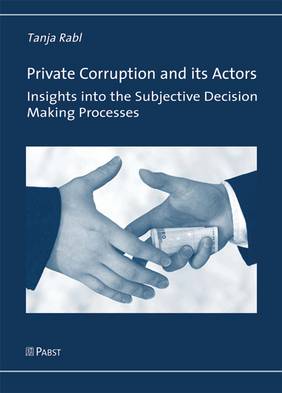
Private Corruption and its Actors – Insights into the Subjective Decision Making Processes
Rabl, T.